For homeowners who want a seamless, energy‑saving entry point, a prehung exterior door is the most reliable solution; it combines a fully assembled door slab, frame, and hinges, ready to be set into the rough opening with minimal on‑site adjustments. This all‑in‑one package eliminates the guesswork of aligning hinges, shims, and weatherstripping, ensuring a tight seal against drafts and water infiltration right from the first day of installation. Learn how to prep your opening correctly and you’ll see why professionals prefer prehung units over custom‑built door frames.
Why Choose a Prehung Exterior Door?
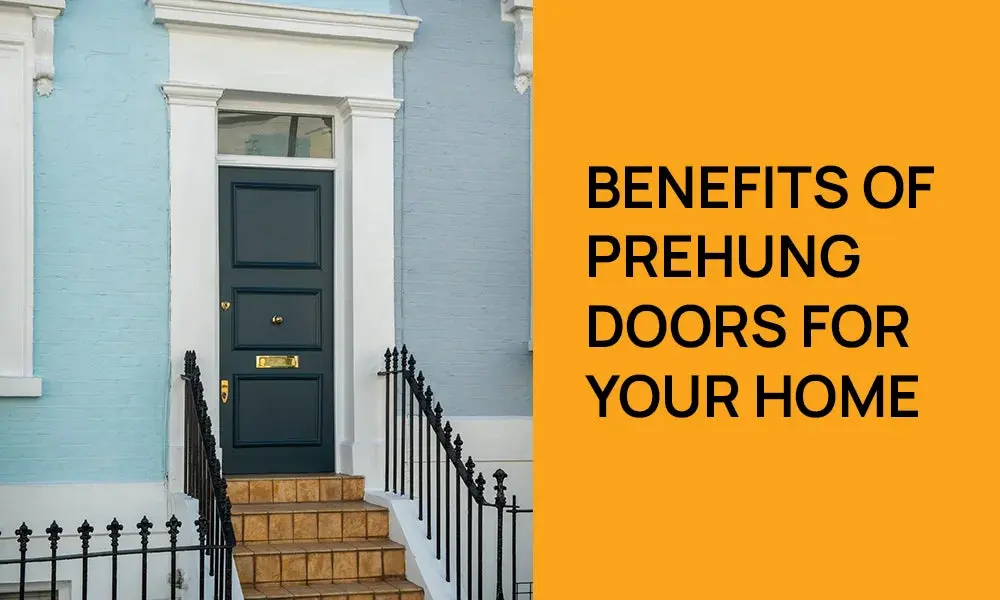
Unlike a slab door that requires separate purchase of a frame, hinges, and hardware, a prehung exterior door arrives at the job site as a complete, factory‑assembled unit. This design offers several immediate advantages:
- Precision fit. Factory‑engineered tolerances guarantee that the door sits plumb within the frame, reducing the risk of warping or sticking.
- Enhanced weatherproofing. Integrated weatherstripping and a properly sealed frame keep out rain, wind, and unwanted heat loss, contributing to a lower energy bill.
- Speed of installation. Professional installers can often finish a prehung door in under two hours, compared with a full‑frame build that may take an entire day.
- Security. Prehung doors typically come with reinforced steel frames and multi‑point locking systems that meet or exceed industry safety standards.
Energy Efficiency in 2026
The International Energy Agency (IEA) reported in its 2025 “Global Building Efficiency” study that doors account for roughly 12 % of residential heat loss in temperate climates. A high‑performance prehung exterior door, equipped with Low‑E glass and a thermally broken steel frame, can reduce that loss by up to 30 % compared with an older, uninsulated slab door. Homeowners who install such doors can expect an average annual heating savings of $150–$250, according to data from the U.S. Department of Energy’s 2026 Residential Energy Consumption Survey.
Table of Contents
- Why Choose a Prehung Exterior Door?
- Energy Efficiency in 2026
- Key Features to Look for When Selecting a Prehung Door
- 1. Frame Material
- 2. Door Core and Construction
- 3. Glass Options
- 4. Hardware and Locks
- Step‑by‑Step Installation Guide (Tutorial)
- Common Mistakes and How to Avoid Them
- Real‑World Case Study: Retrofit in a Historic Home
- FAQ – Quick Answers to Common Queries
- Is a prehung door more expensive than a slab door?
- Can I install a prehung door on a concrete wall?
- How long does a prehung exterior door last?
- Do prehung doors meet fire‑rating standards?
- Future Trends: Smart Integration and Sustainable Materials
- Conclusion: Investing in a Prehung Exterior Door Pays Off
Key Features to Look for When Selecting a Prehung Door
Not every prehung door is created equal. Below are the critical specifications that separate a premium product from a budget‑only option.
1. Frame Material
Steel frames provide unmatched strength and are resistant to warping, but they must be properly insulated to avoid thermal bridging. Fiberglass frames, on the other hand, excel in extreme weather conditions and mimic the appearance of wood without the maintenance. According to the North American Fenestration Standard (NAFS) 2025, both steel and fiberglass frames can achieve a U‑value of 0.30 BTU/(hr·ft²·°F) when equipped with appropriate thermal breaks.
2. Door Core and Construction
A solid wood core offers natural insulation but can be prone to moisture swelling. Many manufacturers now use a composite core—often a blend of high‑density polyurethane foam and engineered wood—providing the best of both worlds: superior R‑value and dimensional stability.
3. Glass Options
Low‑emissivity (Low‑E) glass, double‑pane units, and argon‑filled cavities are now standard for high‑performance doors. For homes in sunny regions, a solar‑control coating can block up to 70 % of infrared heat while preserving visible light, according to a 2026 study by the National Renewable Energy Laboratory (NREL).
4. Hardware and Locks
Look for multi‑point locking systems that engage at three or more locations along the frame, which dramatically improve resistance to forced entry. Certified ANSI/BHMA Grade 1 hardware is the industry benchmark for durability and security.
Step‑by‑Step Installation Guide (Tutorial)
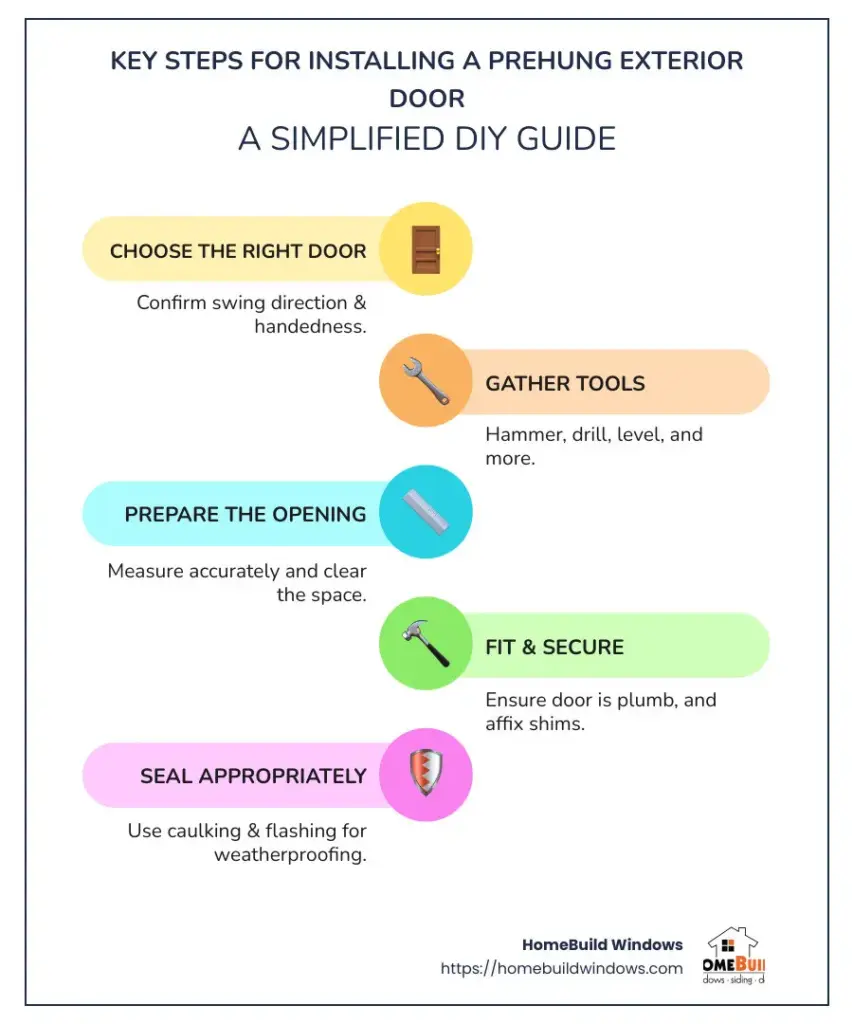
Even if you’re a DIY enthusiast, following a systematic approach reduces errors and ensures the door performs as intended. Below is an actionable checklist based on the 2026 Home Builders Association (HBA) best‑practice manual.
- Assess the Rough Opening. Measure the height, width, and depth of the opening. The opening should be 1/2 inch wider and taller than the door unit to allow for shims and leveling.
- Prepare the Opening. Remove any debris, old framing, or protruding nails. Install a moisture‑resistant sill pan if the floor is concrete or prone to water ingress.
- Apply Flashing. Use self‑adhesive flashing tape around the perimeter of the opening, extending at least 4 inches onto the framing to create a water‑tight barrier.
- Set the Prehung Door. Position the unit in the opening, ensuring the hinge side faces the correct direction. Use a level to verify plumb on both sides and at the top.
- Shim and Secure. Insert pressure‑treated shims at the hinge and strike points, then drive 3‑inch wood screws through the pre‑drilled holes in the frame into the surrounding studs. Do not overtighten, as this can distort the frame.
- Install Weatherstripping. Most prehung doors ship with factory‑applied foam or rubber weatherstripping. Check for gaps and add additional compression seals if needed.
- Attach the Exterior Trim. Secure the casing or jamb extensions with finishing nails, then caulk any seams for a polished look.
- Test Operation. Open and close the door several times, checking for smooth movement and proper latch engagement. Adjust shims as necessary.
- Finish the Surface. Paint or stain the frame according to manufacturer recommendations, typically using a primer designed for steel or fiberglass.
For a visual walkthrough, see our home improvement guide that includes video tutorials and a printable checklist.
Common Mistakes and How to Avoid Them
Even seasoned installers can stumble on a few pitfalls that compromise performance.
- Neglecting the sill pan. Water can seep under the door, leading to rot or corrosion. Always install a proper sill pan with a slight slope toward the exterior.
- Improper shimming. Over‑shimming creates a gap that defeats weatherstripping, while under‑shimming leads to a warped frame. Use a level and a feeler gauge to confirm even spacing.
- Skipping flashing. Flashing is the first line of defense against wind‑driven rain. A common error is to place the tape after the door is set, which can cause wrinkles and water channels.
- Using the wrong fasteners. Stainless‑steel or coated screws are essential for steel frames to prevent corrosion. Galvanized nails are unsuitable for exterior use.
Real‑World Case Study: Retrofit in a Historic Home
When a 1920s bungalow in Portland, Oregon, underwent a historic‑preservation retrofit, the owners chose a prehung exterior door with a custom‑profile wooden overlay to match the original aesthetic. The project, documented by the Oregon Historic Preservation Office in 2025, demonstrated that a prehung unit could be tailored to meet strict design guidelines while still delivering modern performance. Post‑installation energy modeling showed a 28 % reduction in heat loss, and the homeowners reported a noticeable decrease in drafts during winter months.
FAQ – Quick Answers to Common Queries
Is a prehung door more expensive than a slab door?
Upfront cost is typically higher—averaging $850–$1,200 versus $500–$700 for a slab—but the reduced labor time and improved energy efficiency often result in a lower total cost of ownership over 10 years.
Can I install a prehung door on a concrete wall?
Yes, but you’ll need to use concrete anchors and a reinforced sill pan. Many manufacturers provide installation kits specifically for masonry applications.
How long does a prehung exterior door last?
When properly maintained, a steel or fiberglass prehung door can exceed 30 years. Regular cleaning of the hardware and re‑caulking of the exterior seal are the only routine tasks required.
Do prehung doors meet fire‑rating standards?
Most premium models are rated for at least a 20‑minute fire resistance, complying with NFPA 80 standards. Check the product specifications for exact rating.
Future Trends: Smart Integration and Sustainable Materials
By 2026, the market is seeing a surge in “smart” prehung doors equipped with Bluetooth‑enabled locks, built‑in occupancy sensors, and integrated LED lighting. These features not only enhance convenience but also provide data for home energy management systems.
Meanwhile, manufacturers are experimenting with bio‑based composite cores derived from recycled agricultural waste, offering comparable strength to traditional composites while reducing carbon footprints. According to a 2026 report by the Sustainable Materials Institute, doors using these bio‑composites emit 15 % less CO₂ over their life cycle.
Conclusion: Investing in a Prehung Exterior Door Pays Off
Choosing a prehung exterior door aligns with the modern homeowner’s priorities: durability, energy efficiency, security, and aesthetic flexibility. By selecting the right frame material, core construction, and hardware, and by following a disciplined installation process, you can enjoy a weather‑tight, low‑maintenance entryway for decades. For further reading on selecting the best door for your climate, explore our energy efficient doors article, which delves deeper into insulation ratings and climate‑specific recommendations.
Ready to upgrade? Visit your local supplier or browse reputable online retailers, and remember: a well‑installed prehung door is not just an entry point—it’s an investment in your home’s comfort and resale value.
For more detailed guidance on door installation, check out the Wikipedia entry on doors for historical context and technical definitions.
—
